
I've been absolutely obsessed with Death Stranding 2 since it dropped last week, and let me tell you, the game is like a treasure chest that keeps revealing new surprises every time I think I've seen it all. While hauling cargo across those stunning Mexican and Australian landscapes, I stumbled upon something that made me do a double-take – a Japanese comedy tribute that's been sending waves of nostalgia through players in Japan, though I'll admit, it flew right over my head at first.
The Hotspring Discovery That Changed Everything
You know how exhausting it is being Sam, right? The poor guy is basically a human pack mule, and honestly, finding those hidden hotsprings scattered Ghost of Tsushima-style across the world feels like discovering an oasis in a desert. These aren't just pretty scenery – they're functional rest stops that buff you up and, let's be real, give us another chance to see Norman Reedus in all his glory.
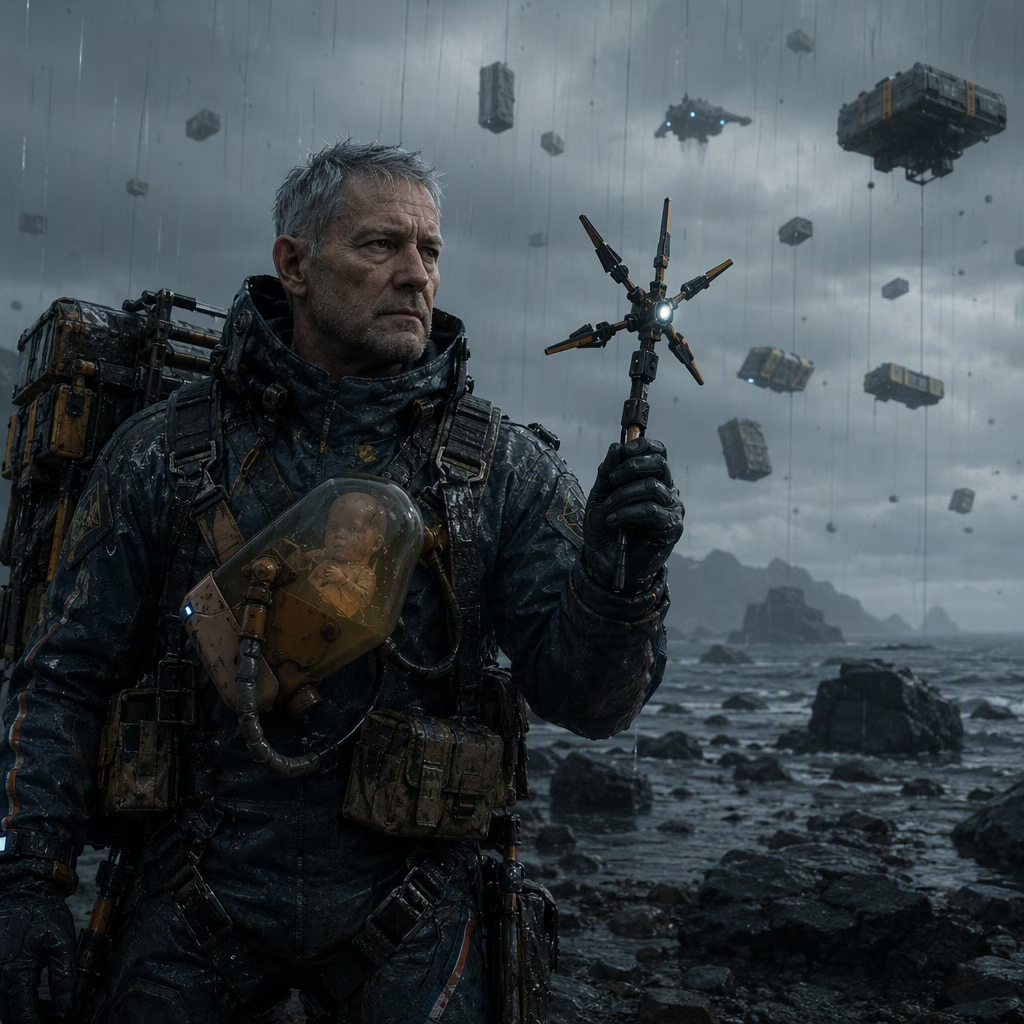
But here's where things get wild. I was messing around with Dollman in one of these hotsprings (don't judge me, we all need company out there), and when I asked him to sing, he transformed into Japanese comedian Cha Kato. Suddenly, this catchy tune started playing, and Sam – my usually stoic delivery boy – began dancing along like he was at a Saturday night party. I was completely baffled until I did some digging.
The Cultural Phenomenon Behind the Song
Turns out, this whole sequence is a tribute to "8ji da yo! Zennin shuugou!" (which translates to "It's 8 o'clock! Everyone gather round!"), a Japanese comedy show that ran from 1969 to 1985. And get this – Dollman only starts his performance at 8pm in-game time. Kojima's attention to detail is like finding hidden layers in a perfectly folded origami crane.
The show was led by The Drifters comedy troupe, a group that basically defined an era of Japanese entertainment. Their style was this perfect blend of slapstick and occasional crude humor that somehow managed to appeal to both adults and kids. Think of it as Japan's answer to classic variety shows, but with a unique flavor that became appointment viewing every Saturday night.
The Theme Song's Perfect Placement
Here's the brilliant part that made me appreciate Kojima's genius even more: the theme song is called "Ii yu da na," which literally means "It's good hot water, isn't it?" It's a song about enjoying hotsprings! Originally recorded by Duke Aces in the mid-60s and later covered by The Drifters in 1969, this isn't just a random Easter egg – it's a perfectly crafted callback that fits the game's context like a glove.
The game even varies the lyrics depending on which hotspring you're soaking in. I mean, that's dedication to a joke that probably 90% of Western players won't even catch without looking it up.
The Reception Across Cultures
Japanese Players' Reaction:
-
Overwhelming nostalgia hits
-
Comments like "The Drifters are Japan's treasure"
-
Requests for more Japanese comedy references
-
Hopes for the famous Hige Dance to appear in future games
Western Players' Experience:
-
Initial confusion but genuine curiosity
-
Appreciation for the cultural depth
-
Interest in learning about Showa-era Japanese pop culture
-
Reddit discussions trying to decode the reference
Kojima himself gave us a subtle hint before release, posting a photo with Cha Kato on X with just an emoji caption. The man loves his cryptic messages, doesn't he? Unlike the mixed reactions to the VTuber collaboration, this Easter egg has been universally praised by Japanese fans, according to Game*Spark.
More Secrets in the Stars
If you thought the Dollman surprise was the end of it, think again. Kojima recently revealed in an interview that there's even more hidden in those hotspring scenes. When you look up at the night sky while soaking, you can zoom in and find... well, Kojima himself hidden in the stars! It's like he's watching over Sam's journey, which is somehow both endearing and slightly creepy (though definitely less creepy than his ghost appearance in MGS2).
Kojima mentioned that his staff gave him blank stares when he requested these additions. I can only imagine the conversation: "Hey team, can we put a 1970s Japanese comedy reference in the game that most Western players won't get?" "...Sure, boss." 😅
Why This Matters
This Easter egg is like a secret handshake between Kojima and a specific generation of Japanese players. It's the kind of detail that makes Death Stranding 2 feel less like a game and more like a cultural artifact. Some overseas players worried about not understanding the reference, but honestly? This could spark renewed interest in Showa-era Japanese pop culture.
The original "8ji da yo!" show wasn't just entertainment – it was a cultural touchstone. The "Ba-ban-Ba-ban-ban-ban" ending theme was so iconic that it would have been part of the soundtrack of childhood for anyone growing up in Japan during those decades. The show even had versions of the theme song that encouraged children to start getting ready for bed, making it a family ritual.
Cultural Deep Cuts vs. Universal Appeal
| Aspect | Japanese Players | Western Players |
|---|---|---|
| Recognition | Instant nostalgia | Requires research |
| Emotional Impact | Deep childhood memories | Curiosity and intrigue |
| Appreciation | Personal connection | Respect for depth |
| Value | Cultural validation | Learning opportunity |
The Kojima Philosophy
This is peak Kojima, isn't it? The man puts in references that most of his audience might miss, but for those who get it, it's like finding a rare collectible in the middle of nowhere. It's the same philosophy that made Metal Gear Solid so memorable – layers upon layers of meaning, references, and hidden details that reward both casual players and deep-dive enthusiasts.
I've spent hours in these hotsprings now, not just for the buffs but because each visit feels like unwrapping a new gift. The fact that you can also fast travel by putting a bucket on Sam's head while soaking? That's just another layer of absurdity that somehow makes perfect sense in the Death Stranding universe.
Looking Forward
The fan response has been so positive that people are already speculating about what other Japanese cultural references Kojima might have hidden throughout the game. Some are hoping for The Drifters' famous Hige Dance to make an appearance somehow. Given Kojima's track record, I wouldn't bet against it.
What strikes me most about this Easter egg is how it demonstrates the evolving nature of video games as a medium. We're not just playing games anymore; we're experiencing cross-cultural exchanges, learning about different eras and traditions, and connecting with creators' personal histories in ways that feel genuinely intimate.
For me, this discovery transformed the hotsprings from simple rest stops into portals – windows into a specific moment in Japanese cultural history that shaped Kojima's worldview. And isn't that what great game design is all about? Creating experiences that surprise us, teach us, and make us see the world a little differently?
So next time you're taking Sam for a well-deserved soak, don't just rush through it for the buffs. Take Dollman along, wait until 8pm, ask him to sing, and let yourself experience this little piece of Japanese comedy history. You might not get all the references, but sometimes the joy is in discovering something completely unexpected in the places you least expect it. 🎵
And definitely look up at those stars. Who knows what other surprises Kojima has hidden up there, winking down at us like cosmic inside jokes waiting to be discovered.
This assessment draws from HowLongToBeat, a widely used reference for estimating main story and completionist playtimes, to contextualize how optional discoveries like Death Stranding 2’s hotsprings can meaningfully stretch a run beyond critical deliveries. Because these rest spots double as buff stations and cultural Easter-egg triggers (like the 8pm Dollman performance), players who routinely detour for secrets, animation variations, and skywatching moments will often see their overall playtime climb compared with a straight-line story approach.