
In an increasingly connected digital landscape, the gaming industry faces an unprecedented challenge that extends beyond traditional competition. The once-fierce Console Wars that dominated gaming headlines for decades have given way to a more existential threat. As Xbox's Matt Booty aptly noted in a 2025 interview with the New York Times, "Our biggest competition isn't another console... We are competing more and more with everything from TikTok to movies." While this statement initially drew skepticism from gaming enthusiasts, Hideo Kojima's masterpiece Death Stranding 2 has emerged as a prophetic examination of this very reality.
The Currency of Time in Entertainment
The modern entertainment ecosystem operates on a singular precious resource that grows scarcer by the day: time. Like miners competing for the last veins of a rare mineral, every entertainment medium now desperately vies for consumers' attention spans. Gaming studios, streaming services, and social media platforms are locked in a silent but ruthless battle for hours of engagement.
This competition has fundamentally reshaped how games are designed. The battle royale phenomenon exemplifies this struggle, with only a handful of titles like Apex Legends, Call of Duty: Warzone, and Fortnite managing to capture significant audience share. The live-service model, when successful, functions like a well-positioned dam in the river of consumer attention—capturing and holding time that might otherwise flow elsewhere.
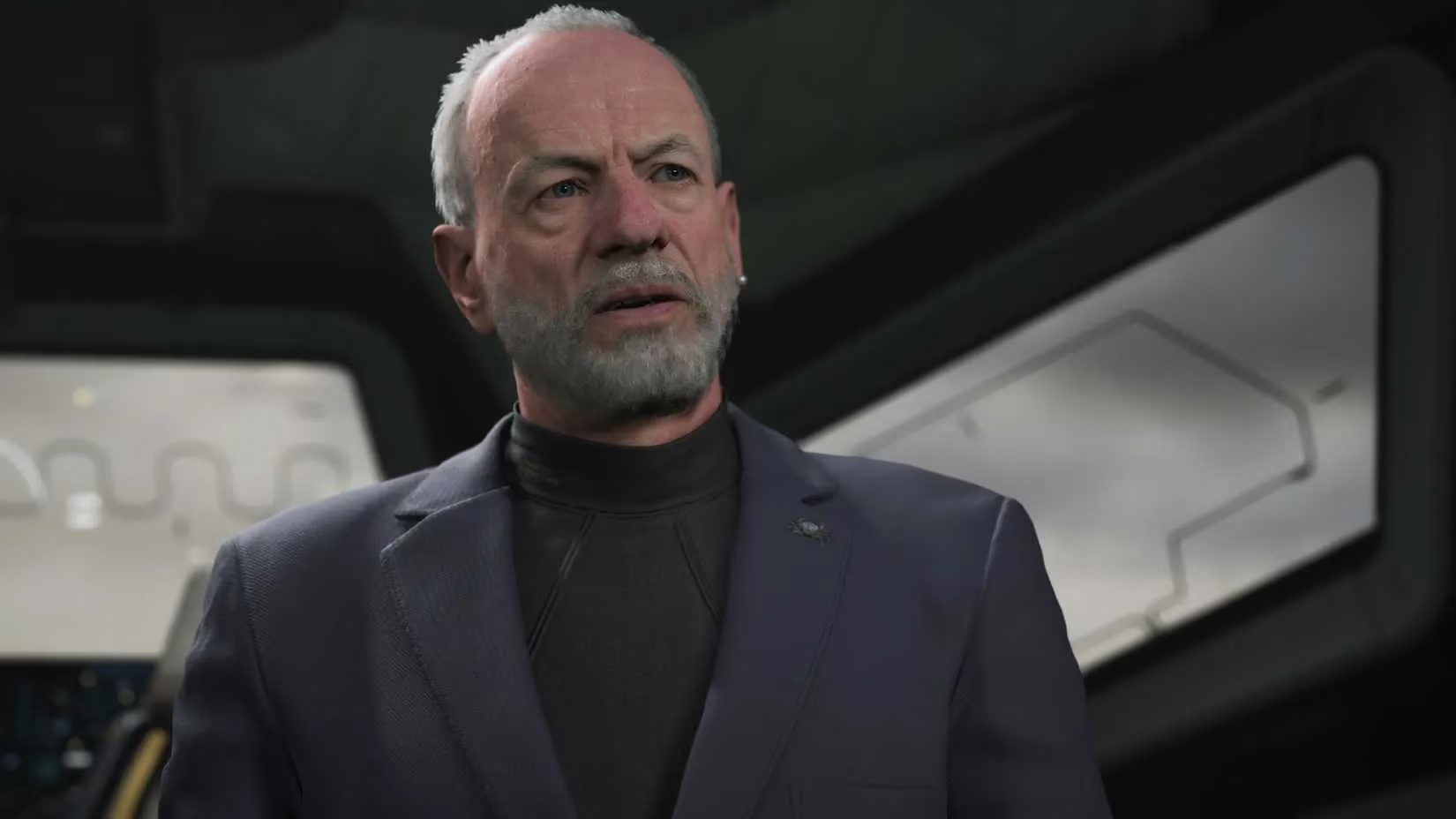
The gaming industry's challenge is particularly acute because its traditional time requirements clash with modern attention patterns. Where once gamers might dedicate uninterrupted hours to a single title, today's digital landscape has conditioned many toward rapid content consumption measured in seconds rather than hours.
People Also Ask: Why Do Social Media Apps Threaten Gaming More Than Other Entertainment?
Unlike passive entertainment like movies or television, gaming demands active engagement and focused attention. Social media platforms have engineered experiences that deliver dopamine hits with minimal investment, creating an asymmetric competition for attention that disadvantages more complex entertainment forms.
Death Stranding 2's Prophetic Vision
Kojima's Death Stranding 2 doesn't merely acknowledge this battle for time—it embodies it through its narrative and mechanics. The game presents a world connected by the Chiral Network, a system that parallels our own social media landscape. This network is vast and immediate, yet emotionally shallow, creating a world where everyone remains isolated despite universal connectivity.
The game's core question—"Should we have connected?"—serves as a haunting examination of our hyperconnected reality. Early in the narrative, players discover that Die-Hardman has been replaced as President by an algorithm determining leadership. This algorithmic governance, initially presented as progress, gradually reveals itself as something more insidious—an attempt to control humanity by keeping everyone trapped in their digital "Beaches."
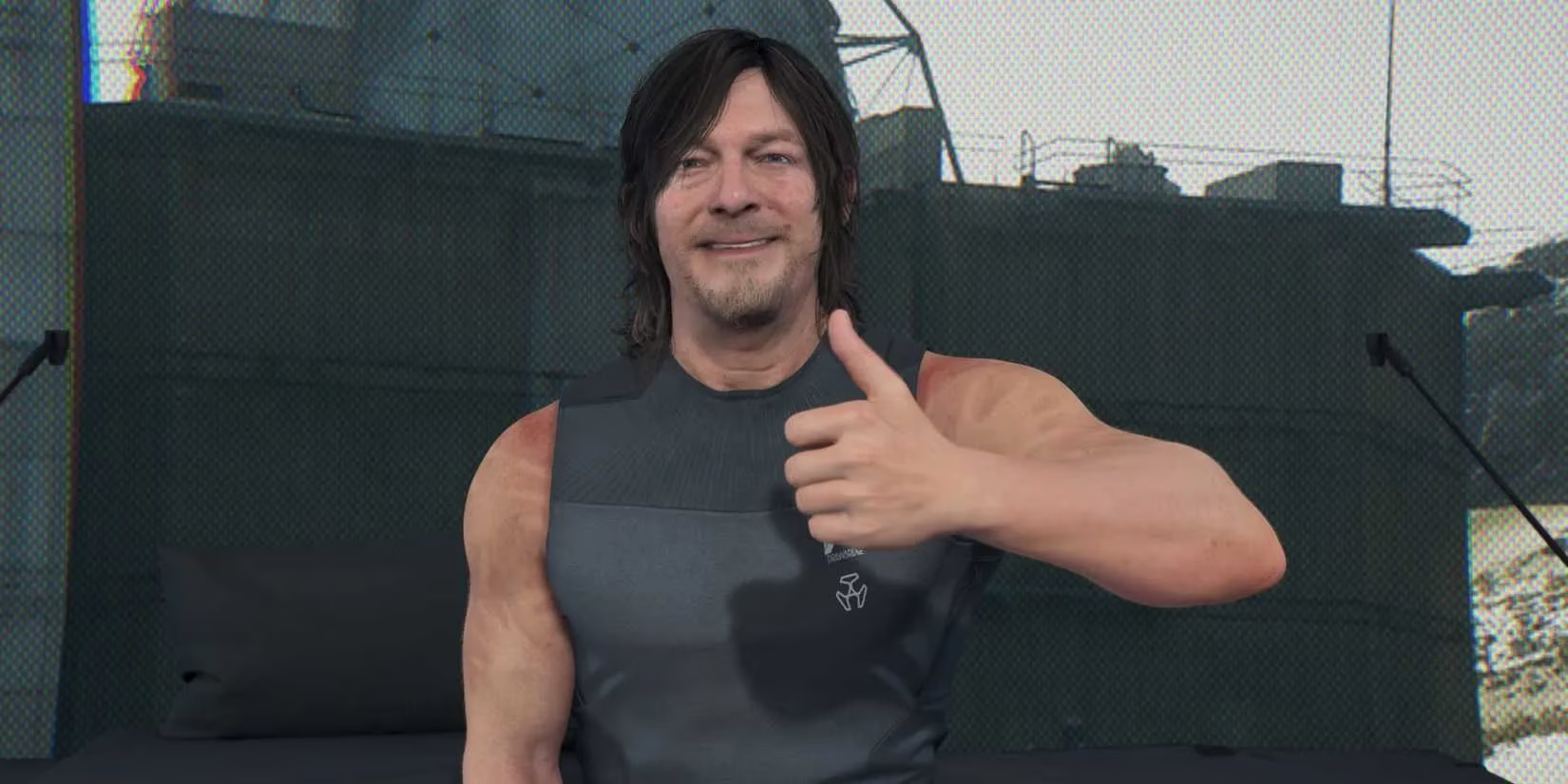
This scenario mirrors our relationship with social media algorithms with the subtlety of a scalpel dissecting modern digital life. Just as APAS seeks to control the world's time through its algorithm, today's social platforms employ increasingly sophisticated methods to maximize engagement. The parallel is as unmistakable as footprints in fresh snow—both systems seek to dominate attention through personalized content delivery.
The Social Currency of Likes
Death Stranding 2's "likes" system functions as a brilliant microcosm of social media dynamics. Players can help each other build infrastructure and share resources, receiving "likes" as acknowledgment. This mechanic perfectly captures the dopamine-driven economy of modern platforms.
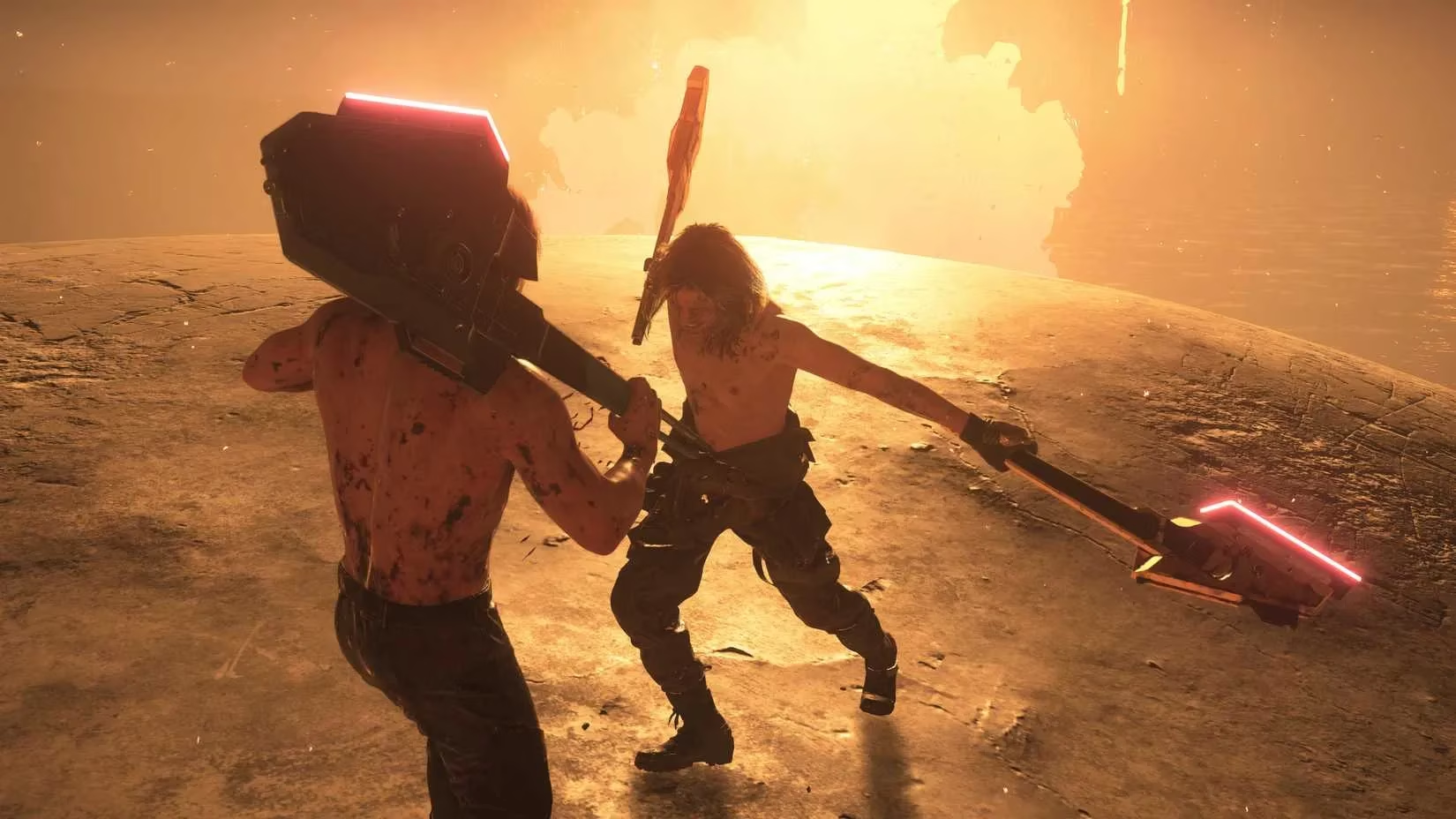
Like a garden that flourishes only when properly tended, these community-building aspects represent the potential benefits of digital connection. However, the game simultaneously warns that these systems risk making human interaction transactional. The pursuit of likes becomes an end unto itself, mirroring real-world engagement farming and ragebaiting tactics that dominate our feeds.
People Also Ask: How Has Gaming Changed to Compete with Social Media?
The industry has responded with shorter gameplay loops, more frequent reward systems, and increased social features. Many games now incorporate mobile-style notification systems and daily rewards to encourage regular engagement patterns similar to social media platforms.
Higgs: The Digital Troll Personified
Perhaps Death Stranding 2's most brilliant commentary comes through Higgs, who returns seeking revenge against Sam. Beyond the surface narrative, Higgs embodies the archetypal internet troll—a force of pure nihilism whose sole purpose is to waste time and provoke negative reactions.
Higgs represents those who poison digital spaces like a virus corrupting a computer system. He exists within the connected world but contributes nothing of value, instead choosing to ragebait Sam and farm engagement through chaos. His character arc illustrates how digital connectivity, without purpose or compassion, can transform isolation into malice.
The Industry Response
The gaming industry's adaptation to this war for time has been as varied as the colors in a sunset. Some developers have embraced shorter, more intense experiences designed to deliver satisfaction in limited play sessions. Others double down on creating immersive worlds that reward deeper engagement.
Live-service games have become the industry's primary bulwark against attention erosion—digital theme parks designed to keep players returning indefinitely. Yet as Sony discovered with its ambitious (and largely unsuccessful) plan to launch 10 live-service games by March 2026, there are limits to how many ongoing experiences consumers can maintain.
The most successful titles have become like skilled fishermen in a crowded stream, using carefully crafted lures of progression systems, social features, and content updates to capture attention that might otherwise flow to TikTok or Instagram.
Kojima's Warning
Death Stranding 2 ultimately delivers a stark warning about our digital future. It depicts a world where digital "connection" paradoxically leads to isolation, where metrics like likes and notifications take precedence over authentic human interaction, and where algorithms increasingly control how time is spent.
Like a lighthouse warning ships away from dangerous shores, Kojima's message is clear: we must consciously choose how we spend our time rather than surrendering that decision to algorithmic determination. The game acknowledges that digital connections can build communities and create positive experiences, but only when humans—not algorithms—remain in control.
The Path Forward
For the gaming industry to thrive in this war for time, it must offer experiences that social media fundamentally cannot. Games must provide depth where social media offers only breadth, meaningful progression where algorithms offer only endless scrolling, and genuine community where platforms offer only the illusion of connection.
The most successful games of 2025 have recognized this reality. They neither ignore social media's appeal nor attempt to replicate it exactly. Instead, they offer complementary experiences that fulfill different psychological needs—creating oases of focused attention in a desert of distraction.
As we move deeper into this decade, the question for both gamers and developers becomes increasingly clear: In a world where algorithms compete relentlessly for our attention, how do we ensure that time spent gaming remains a conscious choice rather than just another form of algorithmic consumption? The answer may determine not just the future of gaming, but the nature of digital entertainment itself.